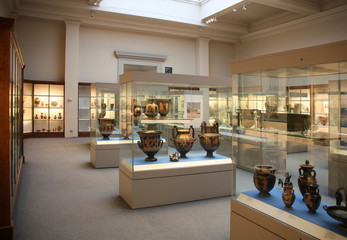
Discover History and Collectibles at The Smoky Mountain Relic Room

Based in Sevierville, Tennessee, Chase Pipes is an accomplished antiquarian who attended Carson Newman College, where he studied history before pursuing a career in the acquisition and sale of artifacts, fossils, and minerals. Chase Pipes owns the Smoky Mountain Relic Room.

The Smoky Mountain Relic Room is said to house the most diverse collection of ancient items in North America. The Relic Room has a team of devoted history finders who combine four decades of expertise in identifying, preserving, and promoting history and associated antique items. The team welcomes visitors who share similar goals. It also leverages digital technology to spread discoveries through documentary films on their YouTube channel, Chasing History, and radio podcasts.

Visitors to the Smoky Mountain Relic Room can obtain old items and learn authentic stories about them. The collection of objects in the Relic Room includes fossils, currency, antiques, artifacts, and other collectible materials, as well as history books. To check available items at the store online, visit Therelicroom.com/store

Historical Thinking Skills All Historians Need

Chase Pipes is an accomplished preserver of history and documentarian. He is the co-owner and operator of the Smoky Mountain Relic Room in Sevierville, Tennessee. Chase Pipes is involved in buying and selling fossils and meteorites, restoring artifacts, and volunteering at state parks as a living 18th-century historian and guide.

A historian must possess certain skills to do their job well. A good historian must have the four main types of historical thinking skills: crafting historical arguments from historical evidence, chronological reasoning, comparison and contextualization, and historical interpretation and synthesis.

Crafting historical arguments from historical evidence enables historians to analyze historical events and draw conclusions using evidence from those events. They must learn to distinguish between facts and opinions and use evidence to support their claims.

Historians should be able to reason chronologically, i.e., from the earliest times to the modern day. This skill helps them organize information into meaningful patterns and relationships. Furthermore, historians should be able to compare and contextualize historical events across cultures, eras, and countries. This skill allows them to recognize similarities and differences among various groups of people and societies. For example, historians could compare the American Revolution with the French Revolution or the Roman Empire with the British Empire.

The ability to describe, analyze, assess, and generate alternative interpretations of the past based on facts, logic, contexts, points of view, and frames of reference gleaned from primary and secondary historical sources is a critical component of historical thinking. Historians should be able to critique different historical interpretations. They should be able to see that historical interpretation is constructed, that historians’ points of view affect their interpretations, and that models of historical interpretation change over time.

Chasing History Discovers Never Before Seen Ruins

In 2008, Chase Pipes began his role as the co-owner and operator of the Smoky Mountain Relic Room, a vendor for ancient artifacts, fossils from diverse time periods, and meteorites in Sevierville, TN. To share his passion with a wider audience, Chase Pipes produces the podcast and YouTube series Chasing History, where he records his digs in a documentary style.

In spring 2020, the Chasing History crew undertook an expedition to an area of Colorado that supposedly contained never before seen ruins. Gathering testimony from nearby ranchers, the crew drove to the indicated area before exiting their vehicle to hike the rest of the way. Eventually, they found ruins hidden in a remote canyon created by the Puebloan people between 700 and 1130 A.D.

The Puebloan people created permanent stone structures, unlike many Native American tribes at the time. A dozen granaries at the site remained in such good condition that the crew found in-tact corn cobs. To raise awareness of the location’s existence, they photographed them in as much detail as possible and refrained from removing any artifacts from the site.

Great Smoky Mountains National Park – A Historically Significant Site

Situated in the southeastern United States and east of the Mississippi River, Great Smoky Mountains National Park was established in 1934 and is recognized as an important historical site and designated as a World Heritage Site. Located in the Great Smoky Mountains, the temperate forest environment is rich in flora and fauna that have provided an abundance of natural resources to humankind for thousands of years, as the Great Smoky Mountains have been occupied by man since prehistoric times. Numerous sites within the park provide evidence of multiple cultures that have lived within the Great Smoky Mountains over the centuries.

Four pre-Columbian cultures are known to have inhabited the area that now comprises Great Smoky Mountains National Park, including the Mississippian, Woodland, Archaic, and Paleo-Indian. The Paleo-Indian culture existed from approximately 12,000-10,000 BC. This culture subsisted as hunters and gatherers. It is believed to have hunted large mammals such as the mammoth and used caves as shelter. Later, the people of the Archaic culture inhabited the area from 8000 to 500 BC.

The first evidence of organized horticulture is believed to have occurred in the period of 500 BC to 1100 AD, when the Woodland culture inhabited the area of Great Smoky Mountains National Park and made use of river floodplains for primitive agricultural purposes. During the period of the Woodland culture, more permanent and complex societies developed in the area. The people of the Mississippian culture subsequently inhabited the area between 1100 and 1541 AD.

By the 1700s, European-American settlers began to arrive in the area, which was inhabited by the Cherokee Indians at that time. Having occupied the area for over 1,000 years, the Cherokee possessed extensive knowledge of the plants and animals that existed there. Eventually, by the 1830s, the Cherokee Indians began to implement new agricultural and architectural methodologies learned from the settlers. Tragically, the Cherokee were forced to leave their homeland in the Great Smokey Mountains. Today, some of the descendants of the Cherokee who once lived in the area reside on a nearby reservation.

One of America’s best collections of historical log buildings is located within Great Smoky National Park. Remaining buildings from the 19th century include multiple barns, a log farming house, a blacksmith shop, and a fruit storage house. Visitors to the park are invited to explore these buildings to gain insight into what life was like in the area two centuries earlier. Other historically significant sites in the park include densely inhabited areas such as Cataloochee and Cades Cove and John Oliver Cabin, as well as three churches and 14 cemeteries. The Roaring Fork Historic District is a specifically designated area in the park that was established to protect buildings from this era. The park also contains historic buildings such as hotels, a social clubhouse, and 60 residences from the early 20th century, some of which are part of the Elkmont Historic District.

Visitors to Great Smoky Mountains National Park are invited to explore the extensive Southern Appalachian history of the area via hiking trails, organized tours, and excursions. Rich in natural and cultural history, the park receives more visitors each year than any other national park in the country.

Key Facts about Meteorites and Discovering Them

A meteorite is a solid fragment of material comprised of minerals or iron and nickel that has separated from a comet, asteroid, or meteoroid in outer space. Meteorites travel from outer space through the atmosphere before they fall to the ground of a moon or planet. While passing through the atmosphere, pressure, frictional forces, and exposure to gases can ignite a falling meteorite into a burning mass that is referred to as a bolide.

Each year, thousands of meteorites fall to the earth. They provide valuable information about the early history of our solar system, dating back 4.6 billion years. Some are comprised of stardust that predates the solar system and provide data on the history of the planets within it. Meteorites are known to have a significant impact on life on Earth. For example, early in Earth’s history, meteorites brought organic compounds necessary for life to the planet. Additionally, approximately 65 million years ago, a large meteorite struck the Earth and caused the extinction of the dinosaurs.

According to professionals who research meteorites, one of the best ways to locate these space rocks is with the naked eye. A strategy commonly used to locate meteorites in fields where they are suspected to have fallen is to sweep back and forth over the area of land in straight, parallel lines. Meteorites often break into multiple fragments while passing through the atmosphere, which results in them scattering across an area upon landing. Although some meteorite falls are tracked with automated devices, others are discovered without being previously observed. Researchers suggest that anyone looking for a meteorite outside of their own property contact the owner of the land first.

Unlike rocks that may be partially embedded in the soil, meteorites that have recently landed are situated on the ground’s surface and are typically more noticeable. Meteorites range in size from a few millimeters in diameter to several feet. Newly fallen meteorites have a matte black color, rather than a shiny surface. Because of the burning and melting that occurs as meteorites travel through the atmosphere, their exterior consists of a black crust that is approximately one millimeter thick. Meteorites typically have a smooth surface with fingerprint-like indentations on them. Due to the iron and minerals they are comprised of, meteorites often feel very heavy for their size. They don’t contain light-colored mineral crystals or bubbles. When scratched on an unglazed ceramic surface, a meteorite won’t leave a streak. Meteorites also have magnetic properties and those that are sufficiently magnetized can attract a magnet to stick to their surface.

After finding a meteorite, it should not be touched with bare hands, as oils and microbes on human skin can damage it. Some experts recommend picking up meteorites using a plastic bag that has been turned inside out and subsequently sealing it in the bag to minimize contamination. While some meteorites are collected by researchers and used for scientific research, others are kept as collectible items. The value of meteorites varies according to multiple factors, including composition. Those that are sold must first be certified to ensure their authenticity.

The Methods and Importance of Artifacts Preservation

Artifacts are becoming a more significant part of museums, civic authorities, and everyone involved with works of art. Artifacts are kept for various reasons and are of considerable importance to society. To preserve the artifacts after being unearthed, they must be prepared for storage. The visual attractiveness of works of art is diminished by the effects of aging or accidental damage. Because works of art are primarily objects of aesthetic enjoyment, it is essential to restore their initial aesthetic appeal, lost due to the consequences as mentioned above.

Artifacts must be preserved to avoid additional deterioration. Light and temperature are some of the factors to be considered when preserving artifacts. Photographs and other natural things are frequently stored in museum storage cabinets because these historical treasures are light-sensitive. Sealed cabinets are a common storage capacity used to preserve artifacts. Furthermore, it supports historians’ efforts to preserve artifacts so that future generations will have more accurate evidence of our history.

Another importance of keeping artifacts is that they aid our understanding of history. Examining artifacts provide us with adequate knowledge of historical events. Various institutions use these artifacts to prove numerous hypotheses provided by historians who seek to understand the history of our civilization. Artifacts from our past also allow us to pay tribute to those who played significant roles in molding our history.

Artifact preservation allows for restoration. There are occasions when restoring an object to its former grandeur might help keep deterioration to a minimum. We can restore the item to its original state by looking back to see how it looked when it was created. Replacing some paint or applying a preservation chemical to an object’s surface is often far more effective than simply retaining it in its current state.

Findings that link two different cultures have a significant impact on enhancing tolerance for others. They inspire us to give to others and help us feel more connected as a community. At some point in history, every culture has been influenced by others, creating a rich cultural heritage that impacts all of our lives. Artifact preservation draws people together.

Long-term artifact preservation and storage are also necessary to ensure that artifacts remain a tactile, visible part of history for years to come. Artifacts are usually transferred to a university or other research facility for this purpose. Preservation is a time-consuming procedure, but when done properly, artifacts ranging from pottery to dinosaur bones to ancient scroll writings can be preserved for future generations.

Looking ahead and taking steps to retain the object in its current state is what preservation entails. Even if there is minor damage to the object, treatment to limit deterioration and protect its current condition may be necessary.

Historic preservation gives a link to the community’s and people’s roots. Overall, historic preservation improves the quality of life in any location, making it more enjoyable. Most objects are harmed by the passage of time. Artifact preservation is essential for conserving these physical reminders of our past because of the emotional value we place on them.

A Look at Some Popular Artifacts

Artifacts are man-made objects which represent the culture or history of their creator. From weapons to cooking utensils to even unexplainable objects, they come in different shapes, forms and sizes. They can also be natural objects such as the remains of an object, burnt ash from a cremated body, or plants from a specific location.

Artifacts developed throughout the evolution of man for several reasons. Perhaps the most prominent reason is to learn about the culture or history of its creator(s). Most ancient people that lived didn’t have a written record of their history. So, archeologists collect these objects to learn and write about how they lived. In more general terms, artifacts help us understand how man interacted with his environment in a particular period.

There are several artifacts in the world today that serve different purposes, from data collection to media or history. One such artifact, the Venus of Willendorf, is a Venus figurine that dates back to between circa 28,000 and 25,000 BCE. A workman named Johann Veran discovered it in Willendorf, Austria. The sculpture is round and about 4.4-inches tall. A braid or knit-cap-like adorns her head. In archaeology, Venus figurines metaphorically depict femininity, fertility, grandmother goddesses, or self-portraits by female artists. Venus of Willendorf now lives in the Natural History Museum in Vienna, Austria.

The Olmec Colossal Heads are a collection of 17 head sculptures. They represent men with unique expressions, headdresses, large eyes, and plump lips. This births the school of thought that they represented leaders from a particular place. It is believed that the Olmecs carved them. Mathew Stirling found the first head, Tres Zapotes Colossal Head One, in 1938. It was accidentally discovered at Tres Zapotes. At subsequent times, the remaining heads were found; another at La Zapotes, four at La Venta, ten at San Lorenzo, and one at La Cobata. They are huge sculptures and stand at about ten feet tall. The creators’ origin and means of transport of the heads remain a mystery. The Olmec heads are currently in different museums in Mexico, including the San Lorenzo Tenochtitlán Community Museum, Mexico City’s National Anthropology Museum, and Xalapa’s Anthropology Museum.

In 1936, Max Hahn and his wife, Emma, discovered The London Hammer. In some accounts, some people said Emma was his female friend. They were on a walk when they spotted a loose rock that enclosed a piece of wood. They took it home, and their son broke it years later and found the enclosed hammerhead. Afterward, archaeologists confirmed it to be a hammer that dates back to over 400 million years ago. A creationist, Carl Baugh, eventually bought it, and it began to spark attention. Carl used the iron hammer to start a study on how the atmospheric quality of the earth helped giants develop pre-flood.

Napoleon’s gold-encrusted sword is another expensive artifact. Emperor Napoleon Bonaparte led his troops with this sword in 1800. The sword has a golden design, making it even more valuable. It is no surprise that it was auctioned in 2007 at $6.5 million.

Artifacts shape the world and recollect lost history. As the years evolve, important events are lost, and these objects help to rewrite them. This is why artifacts are so priceless.

Remarkable Rifles Used in the American Civil War

During the Civil War, rifles were the most popularly used small arms weaponry. Each of the five distinctive rifle types (namely: rifles, cavalry carbines, rifle-muskets, repeating rifles, and short rifles) was created with a unique function and intended for a certain kind of soldier.

The cavalry carbine and short rifles were nearly the same, used by soldiers where a long barrel couldn’t be used, especially during close-quarter combats. The difference between the two rifles was that the cavalry carbines were best suited for horseback.

The U.S. Model 1861 Springfield rifle-musket, famous for its precision and range, was the most widely used rifle during the Civil War. About 1.5 million Springfield rifle-muskets were manufactured by the end of the war. The rifle weighed 9 pounds with a 40-inch barrel length and could fire across a 300-yard range. In the hands of a skilled soldier, the gun could fire, with pinpoint accuracy, about three shots a minute. The rifle featured a percussion cap firing mechanism, a rifled barrel, and the .58 caliber Minié ball (which, according to the U.S. Army tests, was more precise for long-distance shots).

The Enfield Pattern 1853 rifle-musket alias P53 Enfield or Enfield rifle-musket is the second on the list of widely used firearms in the Civil War. Sharing significant semblance with the Springfield, it was a staple in the British Army for nearly two decades. Both Union and Confederate soldiers favored the rifle because its .577 caliber barrel also accepted .58 caliber bullets. The government imported about a million pieces of the Enfield rifle-musket from the Royal Small Arms Factory in Enfield, England.

Third on the list is the Model 1854 Lorenz Rifle, designed by Joseph Lorenz, an Austrian officer, in 1854. Soldiers first used it during the Italian War of 1859. The Lorenz rifles were nearly as long as the Springfield and Enfield rifles, featuring three barrel bands including a .54 caliber. Rather unremarkable was the erratic quality of the rifles during the Civil War. Some of the rifles were notably high quality and rivaled the Enfield, but others were lower. Just a hundred thousand pieces were purchased by Confederate troops, while the Union acquired about 200,000 pieces of the Lorenz rifles.

Another notable rifle-musket was the British Whitworth rifle-musket with deadly precision, covering nearly 2000 yards. The rifle was designed by a prominent Brtish engineer, Sir. Joseph Whitworth and patented in 1854. It featured a .45 caliber with a unique telescopic sight placement. The telescopic sight could be found on the left side, just opposite the lock plate. Whitworth was the Confederate sharpshooter’s favorite but sadly low in supply during the war. The British government discontinued the Whitworth firearm production because it had a higher pollution rate than Enfield’s, and its production cost was almost five times as much.

The most sophisticated rifle used during the Civil War was the Henry Rifle. It possessed a lever-action feature, with unprecedented fire-power (at sixteen bullets capacity and a .44 caliber). The weapon was a result of Benjamin Tyler Henry’s three-year design effort and was patented in 1860. By 1866, nearly 14,000 units had been produced. It was a pride to own a Henry rifle, putting Confederate soldiers at a grave disadvantage. The repeating rifles sported unusual copper rim-fire cartridges superior to the firearms of the Confederate soldiers.

The Extinction of Mammoths as a Result of Climate Change and Genetics

Woolly mammoths walked the earth for millions of years till most of them died 10,000 years ago. They first emerged in Siberia and spread over North America and Eurasia. These hairy elephant relatives have fascinated us since they were first discovered. They completely vanished 4,000 years ago as a result of a warmer planet and extensive human hunting. Humans used their carcasses to construct shelters and fashion tools and musical instruments from their gigantic tusks.

However, it wasn’t the humans that caused these hairy elephant cousins to disappear entirely. After a team of geneticists from St, John’s College at the University of Cambridge in England analyzed historical environmental DNA from the Arctic, they established that melting icebergs caused the giants to go extinct. The earth became too moist for them to thrive because the food they required was no longer available.

But isolated populations on St. Paul Island and Wrangel Island persisted for generations after most had died out. When scientists compared the DNA of the Wrangel Island mammoths with Asian elephants and older mammoths, they discovered a group of genetic alterations. The researchers found issues with the genes needed for smell, brain development, and sperm production. These mutations threatened the mammoth species by weakening their ability to smell flowers, a vital element of their diet.

After the last Ice Age, the Pleistocene, which concluded some 11,000 years ago, mammoth populations diminished. But the Wrangel and St. Paul Island discoveries revealed that they lasted past the Ice Age in various parts of the Arctic. Their lived into the Holocene Period, our current era.

Woolly mammoths coexisted with humans for 2,000 years, sharing the era of the Pyramids. Therefore, the extinction of the mammoths is the most recent large-scale natural extinction event.

For a long time, many scientists believed that humans were to blame for the extinction of the creatures. The reasoning was that they had existed for so long and thrived until they coexisted with humans, and then they died out. It was erroneously believed that we hunted them to extinction. This research has proven that there were many other factors, not just climate change, that caused their end. After the Ice Age, the planet changed too quickly for mammoths to adapt. Forests and wetlands replaced the mammoth’s preferred grasslands. But the woolly mammoths were good at surviving in the cold, and they flourished by eating grass, flowers, and other plants. They would use their tusks to sweep the snow away and use their trunks to pull up the roots of sturdy grasses. According to fossil discoveries, mammoths existed on every continent except South America and Australia.

If anything, the lesson from the mammoths demonstrates the severity of drastic climate change. There are many modern animals on the verge of extinction, like mountain gorillas, pandas, and Indian elephants. Understanding the mammoths’ demise can put us in a better place to stop the loss of another species. From the mammoth story, biologists and zoologists have learned that when population levels fall under a certain threshold, genetic damage may become irreversible. While genetic testing might be a technique to ensure a species’ genetic variety is sufficient for its survival, stopping the numbers from dropping to non-recoverable levels is simply a better choice.

An Introduction to the Ancient Craft of Pottery

Pottery is an ancient craft, with the earliest known examples of wheel-thrown pottery dating to 4000 B.C. in Egypt and 3000 B.C. in China. Early potters developed useful things as well as objects that reflected their gods.

There are two ways to make pottery, by hand or using a wheel. Additionally, there are three primary processes involved in hand-created pottery. Pinch pot is a straightforward style of hand-made pottery that dates back to ancient times. The potter kneads and shapes the clay into a pot, dish, bowl, or cup.

With coiling, the potter rolls the clay into a long roll and then stacks the coils on top of each other to create various shapes. The slab technique uses a thick, flat plate or slice of clay that is cut into forms and then linked together to produce an object. The potter scores the clay (making scratches on the surface) of the linked edges, and uses a slip (diluted clay) to join the individual pieces.

Wheel-created pottery takes specialized knowledge, including operating the wheel and handling the clay while it is spinning. It takes time to develop wheel-throwing skills, but it is a considerably more efficient method once learned. Traditionally, the potter manually powered the wheels by using their leg. However, modern-day wheels are spun by electric motors.

While there are several varieties of clay, potters use only those with a specific range of qualities. The ability to shape without cracking or breaking is among the essential properties required. Also, the clay must have the ability to be fired to the temperatures required to transform from raw clay into a ceramic material without distortion. It must also have the ability to produce repeatable results using the same treatment, allowing the potter to create the desired wares consistently.

Three commonly used categories of pottery clay are earthenware, porcelain, and stoneware. Earthenware, constructed of clay mined from the earth, is often baked at a lower temperature than the other two categories. If it is not glazed, it will absorb water and prevent light from passing through. The pottery color is determined by the clay used – it is typically buff, brown, or a reddish hue. Earthenware pottery was historically the most prevalent type of pottery in ancient, medieval, Middle Eastern, and European cultures, and it remains one of the most popular today.

Using a combination of china clay (petuntse) and china stone (kaolin), the potter can create porcelain. Porcelain is classified into three types – hard-paste, soft-paste, and bone china. Hard-paste is a ceramic material initially manufactured by firing petuntse and kaolin at extremely high temperatures, typically over 2,500 degrees Fahrenheit.

Potters create soft-paste by combining white clay and “frit,” a glassy substance composed of white sand, gypsum, soda, salt, alum, and nitre. After fusing the white clay and frit with lime and chalk, the mixture is fired at temperatures lower than 2,500 degrees.

The term “bone china” refers to porcelain manufactured from bone ash, feldspathic material, and kaolin. Bone china has a translucent body and contains at least 30 percent phosphate derived from animal bone and calcium phosphate.

Although made of clay, stoneware pottery is fired at a higher temperature than earthenware. The temperature is sufficiently high to vitrify the materials and render the pottery impenetrable to liquids, even when unglazed. Because stoneware does not absorb water, the potter is not required to add a glaze.

Design a site like this with WordPress.com
Get started